
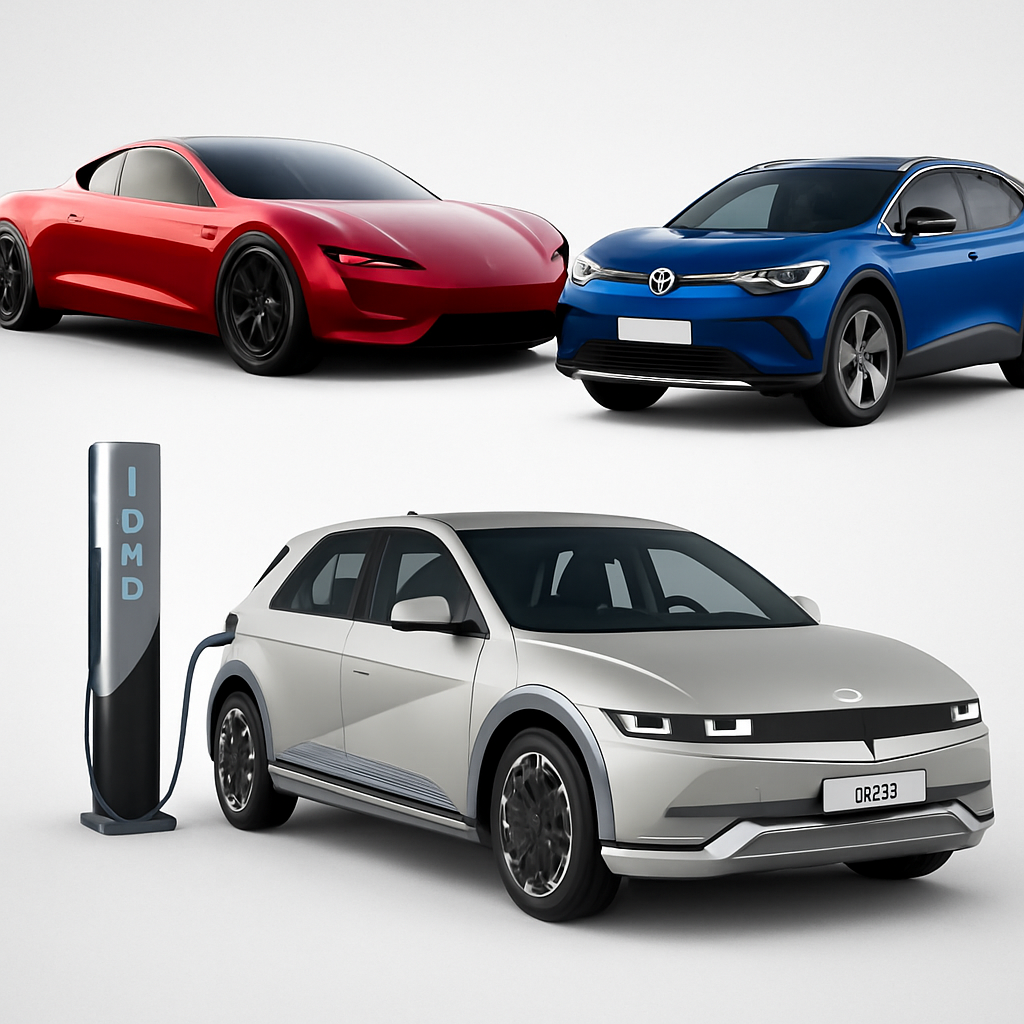
Electric Cars and Health: What the Tesla Model Y Case with SPIRO® Technology Reveals
The transition to electric mobility is one of the most profound transformations of our time. Reducing CO₂ emissions is an undeniable goal, and electric vehicles (EVs) are seen as a key solution in the fight against climate change.
However, in addition to the environmental benefits, this transition also brings new public health challenges, caused by continuous exposure to electromagnetic fields (EMF) in enclosed vehicle cabins.
Recent research, such as the study published by NOXTAK® in the Journal of Applied Biotechnology & Bioengineering (2025), has extensively analyzed the electromagnetic emissions of two Tesla Model Y models (2021/2022) under various operating conditions, using multi-band instrumentation and bio-electrography of the environment (BioWell GDV).
1. Differences between electric vehicles and internal combustion engine vehicles
An electric car differs not only in propulsion from a gasoline vehicle but also in the nature and extent of the generated EMF:
-
Motor and battery: the large battery pack under the seats continuously emits low-frequency electric and magnetic fields (ELF/LF) during operation.

- Electronics and connectivity: navigation systems, Wi-Fi, Bluetooth, sensors, and communication with external servers generate constant radio frequencies (RF).
- Charging: during charging, especially at public charging stations without insulation standards, EMF emissions can significantly exceed the reference values of authorities such as ICNIRP.
Tesla has made progress in reducing the electric field at its Superchargers, but magnetic fields and RF persist, mainly due to the high connectivity of the vehicles, which function as powerful access points.
2. Exposure and biological effects
EMF are not directly perceptible but do affect the body. Research and field measurements point to the following potential health risks:
- Oxidative stress: associated with more than 75 health problems, including premature aging.
- Nervous system impairment: disruption of neuronal and autonomic regulation.
- Impact on the heart: effect on heart rhythm and heart rate variability.
- Sleep disturbances and chronic fatigue.
- Exacerbation of existing conditions in people with electrohypersensitivity (EHS).
Of particular concern is the exposure of children and babies:
- A child absorbs up to 5 times more radiation than an adult.
- A baby absorbs up to 10 times more due to the higher conductivity and lower bone density of the developing skull.
3. The regulatory problem
Currently, there is no standardized measurement protocol or exposure limit for vehicles, as is the case for mobile phones via the SAR (Specific Absorption Rate).
Researchers, including NOXTAK, propose establishing parameters based on the ALARA principle (As Low As Reasonably Achievable) and incorporating metrics of electromagnetic coherence, instead of solely thermal values.
4. The Tesla Model Y study with SPIRO®
During the tests, the following measurements were performed:
- ELF/LF and RF fields in various scenarios (city traffic, highway, normal charging, and fast charging).
- Connected body voltage and ambient coherence measurements.
-
Bio-electrography to assess the impact on biological homeostasis.


The results showed that most electromagnetic disturbance occurred during fast charging, affecting the stability of the cabin environment.
The installation of SPIRO® Power 19, a passive nanocomposite that filters interference by reorganizing spins, resulted in an average reduction of 61.95% in electromagnetic entropy, without blocking signals or disrupting connectivity.
5. Recommendations
The study concludes with three key messages:
- The risk is real and measurable: EVs create exposure conditions that can affect long-term health.
- Passive filtering is a feasible and available solution for current users, without waiting for regulations to catch up with technology.
- Current regulations are inadequate: there is an urgent need for biological measurement protocols and specific design limits for vehicle electromagnetic load.
📌 Concluding remark: The transition to clean electric mobility must not jeopardize human and environmental health. Integrating filtering solutions and clear regulations makes the transition safer, more sustainable, and aligned with public health.